Full-arch reconstruction
All-on-6 Dental Implants in Mexico
All-on-6 replaces a failing or missing upper or lower arch with one fixed bridge carried by six implants. The treatment is planned from a CBCT scan, bite analysis, bone volume, medical history, and the bridge material that can be maintained over time.
- Implants
- Six per arch
- Result
- Fixed full-arch bridge
- Timing
- Two typical trips
- Decision
- CBCT diagnosis first
Why six implants
Six is a structural choice, not a sales upgrade.
The extra implants can spread bite force and shorten bridge spans, but only when the bone and anatomy allow safe placement.
All-on-6 in Mexico is often considered when the upper jaw has softer bone, when the bite is heavy, or when the planned bridge benefits from more support points. The goal is not simply more implants. The goal is a bridge that can carry chewing forces without asking one area of the jaw to do too much.
If six safe positions are not available, forcing the number can make the plan worse. A better answer may be All-on-4, All-on-5, grafting first, or a staged approach. That is why the scan comes before the package.
Load needs more support
Six implants may reduce unsupported spans and spread force across more bone.
The anatomy is forced
Unsafe angulation, short bone, sinus limits, or nerve proximity can make six the wrong number.
CBCT and bite
The scan shows bone. The bite shows force. The restoration design joins both.
Maintenance
Implants still need clean gums, checked screws, adjusted bite, and repairable materials.
Candidacy
Who qualifies for All-on-6 dental implants?
A candidate has enough safe bone, controlled health risks, enough restorative space, and a realistic maintenance plan.
Better signals
Stable medical history, treatable gum condition, enough bone width and height, controlled bite, and willingness to clean under the bridge daily.
Warning signals
Uncontrolled diabetes, heavy smoking, active gum infection, severe bone loss, poor hygiene, or a request for immediate teeth when stability is not safe.
May need staging
Bone grafting, sinus lift, extractions, infection control, or provisional design changes may be needed before the final bridge is made.
Not promised online
No page can diagnose implant count. The final plan is confirmed after records, CBCT, and an in-person clinical exam.
What patients should see
The page needs clinical proof, not generic smiles.
All-on-6 is a planning-heavy decision. The images should show CBCT, implant planning, prosthetic support, and the clinician behind the case.
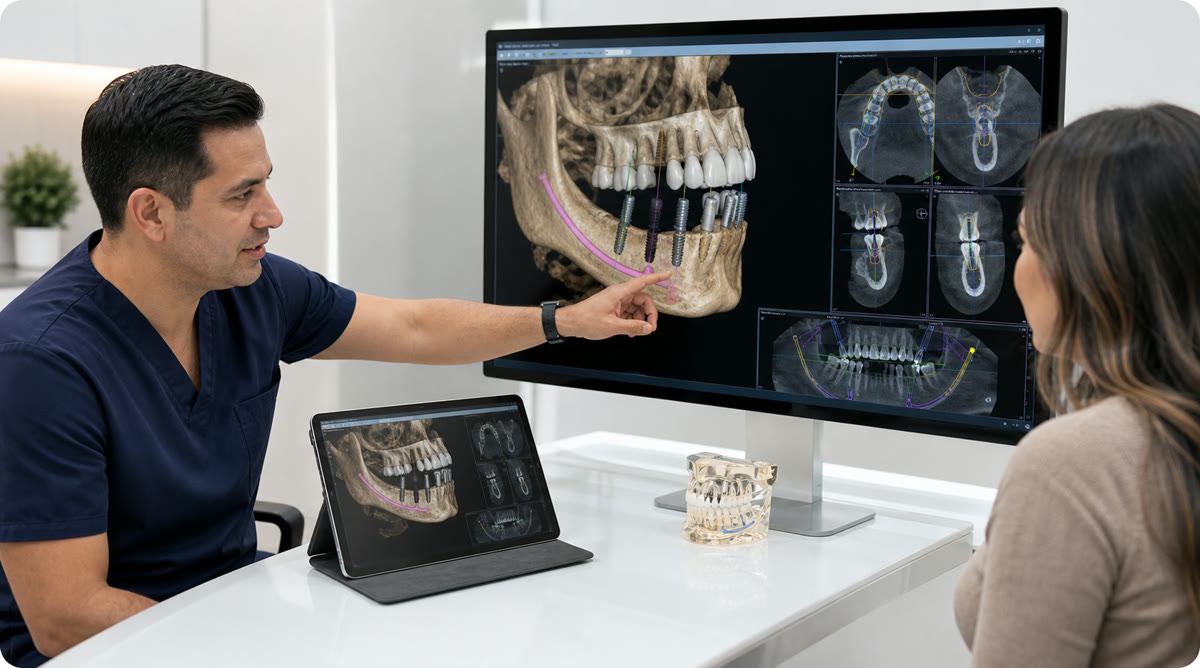
Shows that treatment begins with records and anatomy, not a package price.
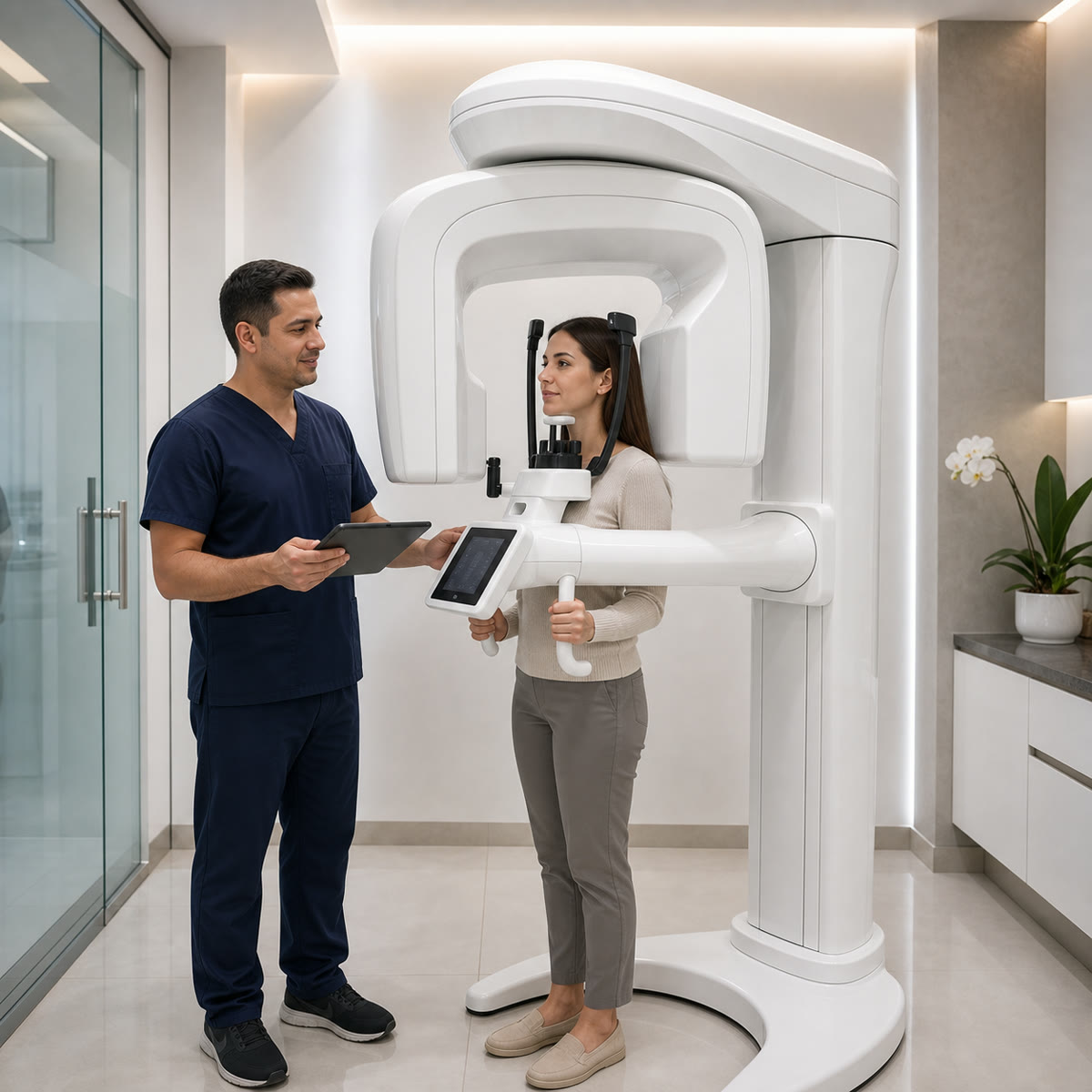
Clarifies how bone, sinus position, nerve location, and implant angles are evaluated.
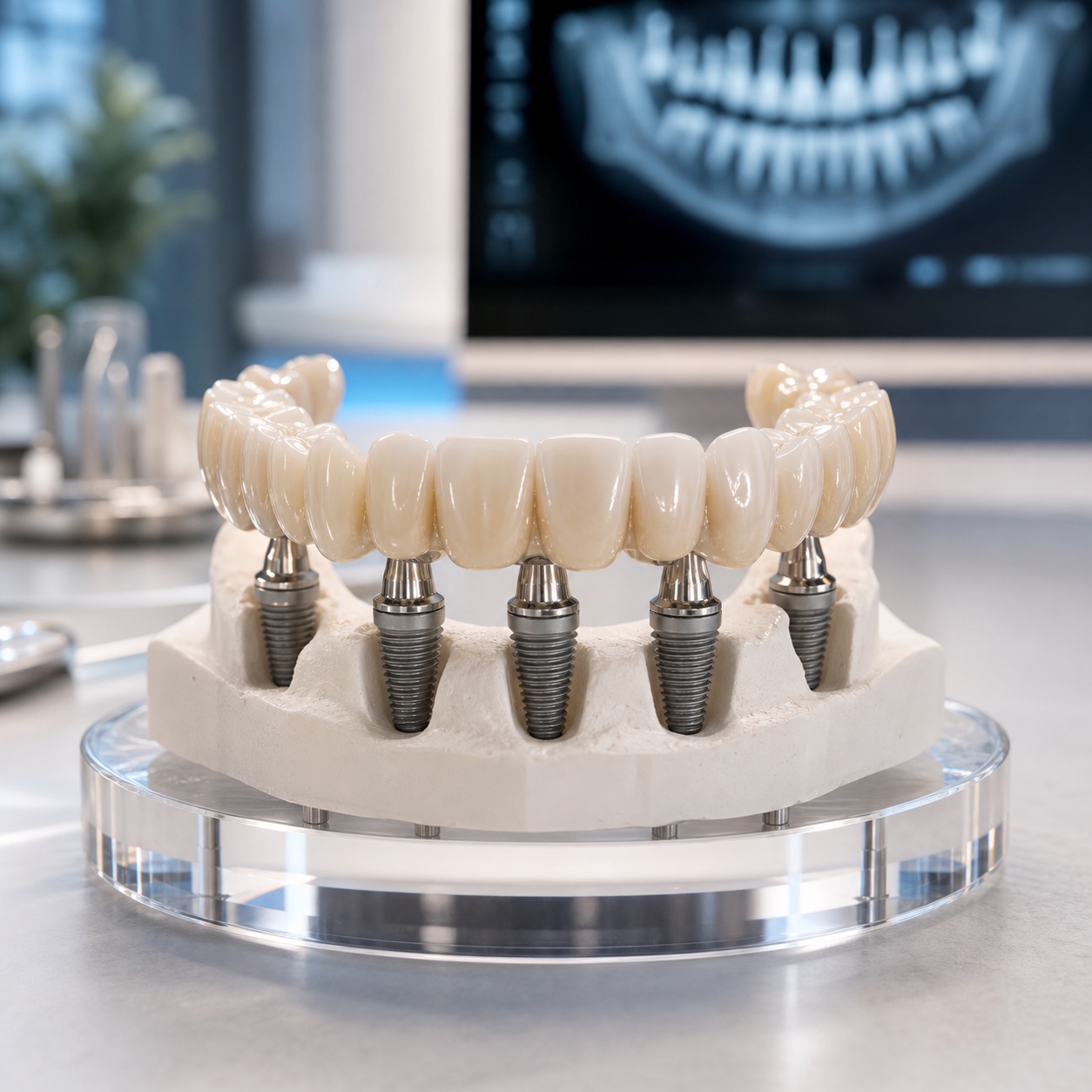
Helps patients understand that the final bridge and repairability matter as much as implant count.
The bridge that goes on top
The implant count is only half the restoration.
The bridge material affects cost, repairability, feel, maintenance, and what happens if something chips years later.
PMMA provisional
Often used while the implants integrate. It protects the surgical phase, lets the bite be tested, and should not be mistaken for the final restoration.
Zirconia bridge
Dense, smooth, and highly wear resistant. It can cost more, and repair strategy should be discussed before choosing it.
Titanium bar or reinforced frame
A bar or reinforcement can help distribute force through the bridge. It also changes lab work, cost, and repair planning.
Timing
Two trips, with healing at home.
Most patients should expect a surgical visit, a healing period, and a second visit for the final bridge.
Surgery and provisional
- RecordsConfirm CBCT and exam
The scan and clinical exam confirm whether the plan is safe.
- SurgeryPlace implants
Extractions, grafting, and provisional teeth depend on the case.
- ReturnHeal at home
Diet, hygiene, swelling control, and follow-up instructions matter.
Final bridge
- After healingVerify integration
Healing is usually measured in months, not days.
- Lab phaseDesign and fit bridge
The final teeth must fit the implants, gums, speech, and bite.
- MaintenanceProtect the result
Cleaning, professional checks, and bite control keep the plan serviceable.
Risks and limits
The safest plan says what All-on-6 cannot do.
All-on-6 dental implants in Mexico still involve surgery. Risks include infection, swelling, bruising, implant failure, gum inflammation around implants, prosthetic complications, and anatomy-related concerns near the sinus or nerve. The scan reduces guessing, but it does not remove biology.
The bridge also needs maintenance. It must be cleaned under the teeth, the bite should be checked, and the screws and prosthetic material need periodic review. Implants do not decay, but the bone and gum around them can become inflamed if plaque is left in place.
Same-day teeth for everyone
Immediate provisional teeth depend on implant stability and surgical judgment.
Grafting or sinus lift
If the scan shows missing bone, the patient needs to know how that changes cost and timing.
Repair planning
Screws, abutments, bridge material, and implant brand affect future service.
Maintenance
Professional hygiene and bite checks protect both implants and final teeth.
All-on-6 answers
The questions patients ask after the scan.
These answers keep the page aligned with cost, candidacy, safety, and recovery intent.
How much does All-on-6 cost in Mexico?
All-on-6 should be quoted after X-rays or CBCT are reviewed. The final number depends on diagnosis, grafting needs, implant system, provisional teeth, final bridge material, warranty, and repairability.
Can I get fixed teeth the same day?
Sometimes. If implant stability is safe, a fixed provisional bridge may be fitted during the surgical trip. If stability is not safe, delaying loading protects healing.
What is the difference between All-on-6 and dentures?
All-on-6 is a fixed bridge attached to implants. A denture rests on the gums and is removed. Fixed teeth can feel more stable, but they require surgery, maintenance, and a larger treatment plan.
Who performs and reviews the treatment?
our clinical team is the clinician associated with the planning and clinical review of these pages. Patients should always confirm the treating clinician, credentials, and final treatment plan before travel.
No result without the record
Send the scan. Get a plan.
A remote review is not a diagnosis, but it tells you whether All-on-6 is realistic for your arch and what an honest plan would involve.
Send a recent panoramic or CBCT scan if you have one, a few photos, your medical notes, and the one thing that bothers you most. The first answer should be what is realistic, not a deposit request.