Results and proof
All-on-6 Results, Shown with Consent
Real proof should come from consented patients, owned CBCT planning views, lab images, bridge context, and honest notes about what the case required.
- Cases
- Consented only
- Images
- Real not stock
- Records
- CBCT owned
- Status
- Build case by case
Proof standards
An empty gallery is better than borrowed proof.
This page should become a case library only when real consented All-on-6 cases are ready.
Do not publish stock smiles, borrowed x-rays, or generic transformations. Each case should explain diagnosis, treatment sequence, material, visits, and limitations.
Until the clinic has approved case media, the page should function as a proof-standard page. That still serves patients: it explains what real All-on-6 evidence should include and makes clear that unverified images are not being used as a trust shortcut.
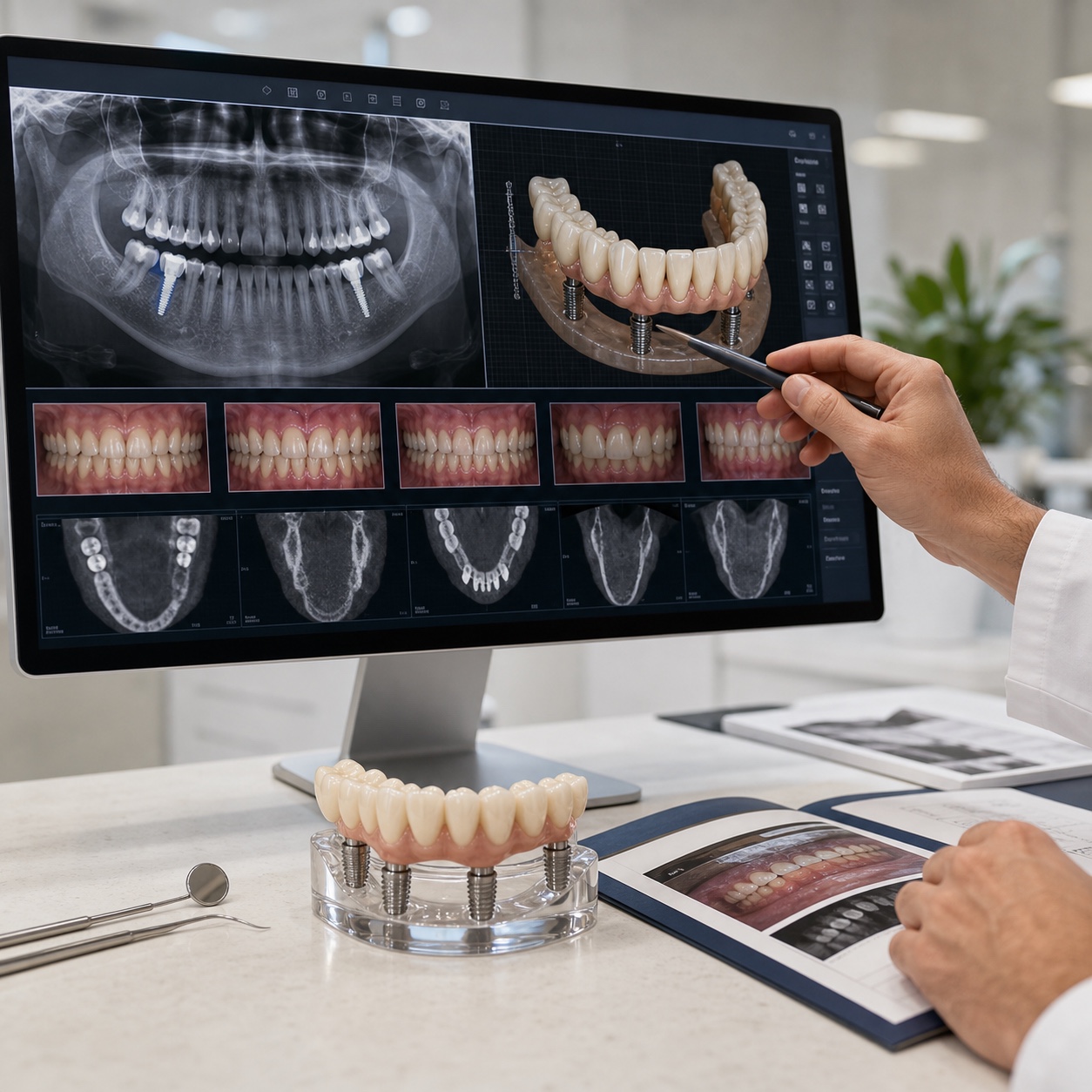
Use real case planning media only when it belongs to the patient and written consent is documented.
What each future case should include
Proof should explain the decision, not just show teeth.
A useful case page tells the patient what problem was solved and what compromises or staging were involved.
Starting condition
Failing teeth, denture problem, bone loss, bite problem, or infection context.
Planning view
CBCT or planning image from the real case, with private details removed.
Treatment sequence
Extractions, implants, grafting, provisional teeth, healing, and final bridge.
Result limits
No guarantee language. Show maintenance notes and explain what was case-specific.
Results questions
Patient proof needs consent and context.
These answers keep the results page honest until real cases are ready.
Why not use stock before-and-after photos?
Because stock smiles do not prove clinical work, diagnosis, implant planning, or material quality. They can mislead patients about what was actually treated.
Can CBCT images be shown publicly?
Only with proper consent and privacy protection. Planning images should belong to the actual case and should not expose private patient information.
Should this page be indexed before cases exist?
That should be decided before publishing. If it remains indexed, it should clearly explain proof standards and avoid pretending to show outcomes.
What is better than a perfect smile photo?
A real consented case with starting condition, CBCT context, treatment sequence, material choice, final result, maintenance notes, and limitations.
What should be added when real cases are ready?
Add consented before photos, planning views, treatment notes, provisional and final bridge details, follow-up timing, and a clear statement that every outcome is case-specific.
Proof starts with records
Build the case library honestly.
Until consented cases are ready, this page should explain proof standards rather than pretending to show outcomes.
Send a recent panoramic or CBCT scan if you have one, a few photos, your medical notes, and the one thing that bothers you most. The first answer should be what is realistic, not a deposit request.