All-on-6 in Mexico FAQ
All-on-6 in Mexico, questions worth asking first.
Answers about cost, candidacy, safety, CBCT planning, two-trip timing, provisional teeth, final bridge materials, repairs, and maintenance.
- Cost
- Itemized quote
- Safety
- Plan not postcode
- Timing
- Two typical trips
- Decision
- CBCT first
Patient questions
The useful answers are specific.
These answers route patients to the right decision page instead of pushing everyone directly to a deposit.
How much does All-on-6 cost in Mexico?
All-on-6 should be quoted after X-rays or CBCT are reviewed. our clinical team's source-truth cost guidance publishes adjacent full-arch reference prices, but the All-on-6 total should come from the written plan after diagnosis, implant system, grafting needs, provisional teeth, final bridge material, warranty terms, and repairability are clear.
Is All-on-6 in Mexico safe?
Safety depends on the clinician, diagnosis, sterilization, implant system, surgical planning, follow-up, and whether the case is accepted only when the anatomy allows it. Mexico is not the safety factor by itself. The plan is.
How do I know if I need All-on-6 instead of All-on-4?
The implant count is decided by bone volume, bite force, arch shape, sinus and nerve anatomy, and the bridge design. Six implants can add support in some cases, but fewer implants can be safer when the extra sites would be forced.
What should an All-on-6 quote include?
It should include or clearly separate CBCT diagnosis, six implants, implant system, abutments, surgery, extractions, grafting or sinus lift if needed, provisional teeth, final bridge material, warranty, repairs, and follow-up responsibilities.
How many trips are needed for All-on-6 in Mexico?
Most full-arch cases are staged across two trips: surgery and provisional teeth first, then final bridge after healing. The healing gap is often several months, and it should be confirmed by the clinician, not rushed by travel plans.
Can I leave with fixed teeth the same day?
Sometimes, if implant stability is safe. Immediate fixed provisional teeth should never be promised before the scan and surgery. If stability is not enough, delaying loading protects the implants.
What can change after CBCT?
CBCT may reveal bone loss, sinus limits, infection, nerve proximity, lack of restorative space, or bite issues. Those findings can change implant count, grafting needs, timeline, and cost.
What makes a low All-on-6 price risky?
A low price becomes risky when it skips CBCT, uses unnamed components, excludes grafting, hides the final bridge, omits provisional teeth, or gives no written warranty and repair plan.
Does All-on-6 always avoid bone grafting?
No. Six implants still need safe bone volume and safe angulation. If the upper back jaw has limited bone near the sinus or the ridge is too narrow, grafting or a staged plan may be needed.
What is the difference between provisional and final teeth?
Provisional teeth are the temporary bridge used during healing when immediate loading is safe. Final teeth are the definitive bridge made after healing, using the selected material and final bite design.
Can a U.S. dentist repair my All-on-6 bridge later?
It depends on the implant system, components, bridge design, and records. Ask for the implant brand, component details, and written records so future maintenance is easier.
Why does our clinical team ask for records first?
Records help identify whether the treatment is realistic before travel. A scan-first process can reveal bone loss, infection, sinus limits, medical risks, or a need for staged care.
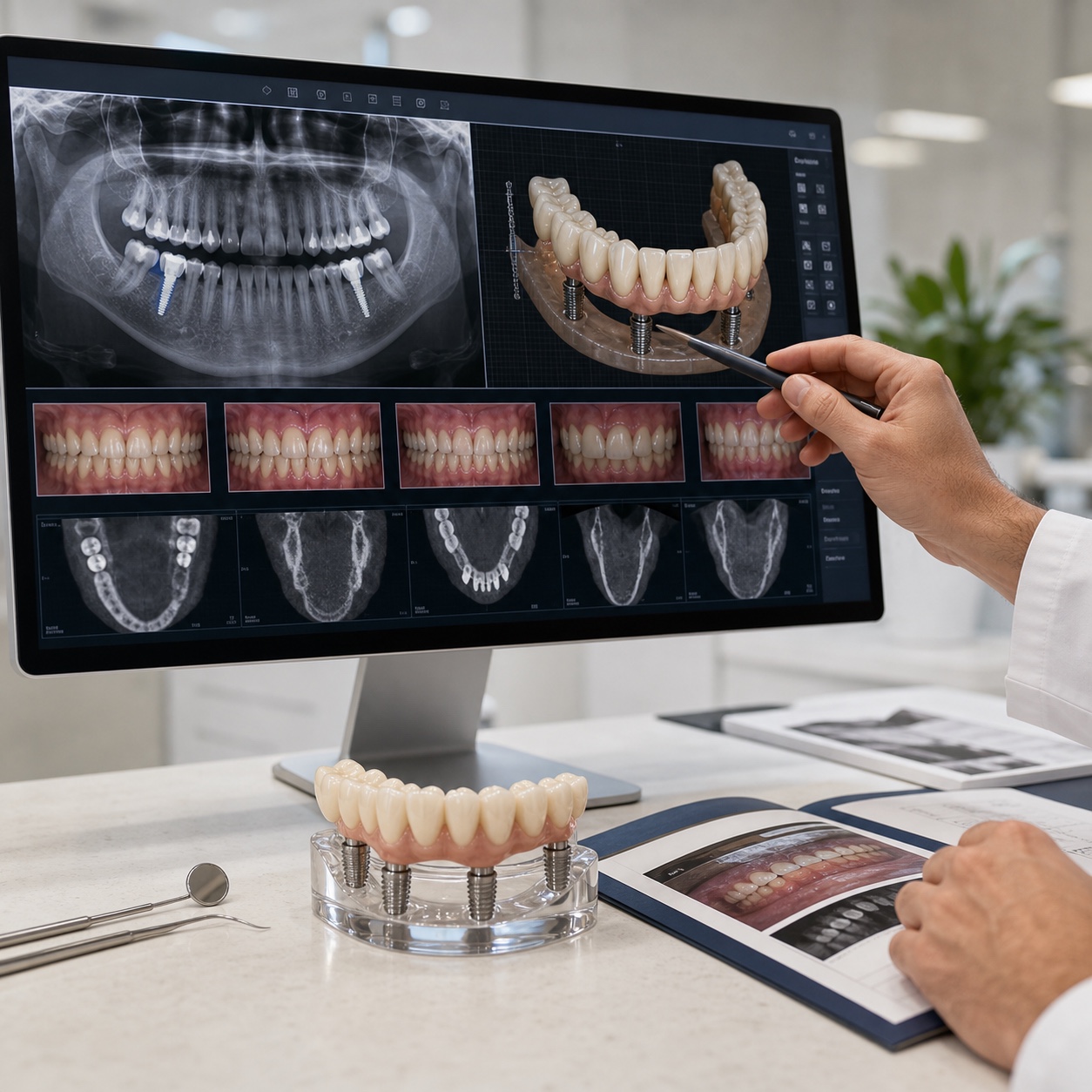
The best FAQ answers point back to diagnosis, planning, materials, and follow-up instead of generic promises.
Compare the quote
Use the cost page when the question is price range, inclusions, exclusions, and what can change after CBCT. Cost guide
Understand the procedure
Use the treatment page when the question is why six implants, how the bridge works, and what the timeline looks like. Treatment guide
Check the process
Use the safety page when the question is medical-tourism risk, clinician identity, diagnosis, and follow-up. Safety guide
Plan the timing
Use the recovery page when the question is trip timing, healing, provisional teeth, and final teeth. Recovery guide
No result without the record
Send the scan. Get a plan.
A remote review is not a diagnosis, but it tells you whether All-on-6 is realistic for your arch and what an honest plan would involve.
Send a recent panoramic or CBCT scan if you have one, a few photos, your medical notes, and the one thing that bothers you most. The first answer should be what is realistic, not a deposit request.