Healing and travel timing
All-on-6 Recovery Time in Mexico
Recovery is usually planned in phases: surgery and provisional teeth, swelling control, soft diet, months of implant integration, then a second visit for the final bridge.
- Trip one
- Surgery and provisional
- Healing
- 3-6 months typical
- Trip two
- Final bridge
- Home care
- Daily cleaning
Recovery phases
The healing happens mostly at home.
Travel should be built around biology, not the other way around.
Surgery recovery
- Day 0Implants placed
Extractions, grafting, and provisional teeth depend on stability.
- Days 1-3Swelling and rest
Plan quiet recovery, soft food, and clear travel timing.
- First weeksProtect the implants
Soft diet and hygiene instructions matter more than rushing chewing.
Integration and final teeth
- 3-6 monthsImplants integrate
The bone needs time to stabilize around the implants.
- Second visitFinal bridge made
Records, fit, bite, and material are finalized.
- Long termMaintenance
Professional checks and home cleaning protect the result.
Protecting the healing phase
Recovery is not passive. It is part of the treatment.
The implants are healing under the bridge, so chewing, cleaning, and follow-up need to match the stage you are in. Recovery planning starts before the surgical trip, because travel, diet, rest, and communication all affect how calmly the first weeks go.
A patient should know what to do if the provisional feels high, a screw feels loose, swelling increases, or the bite changes. The safest recovery page names those signals before they become emergencies.
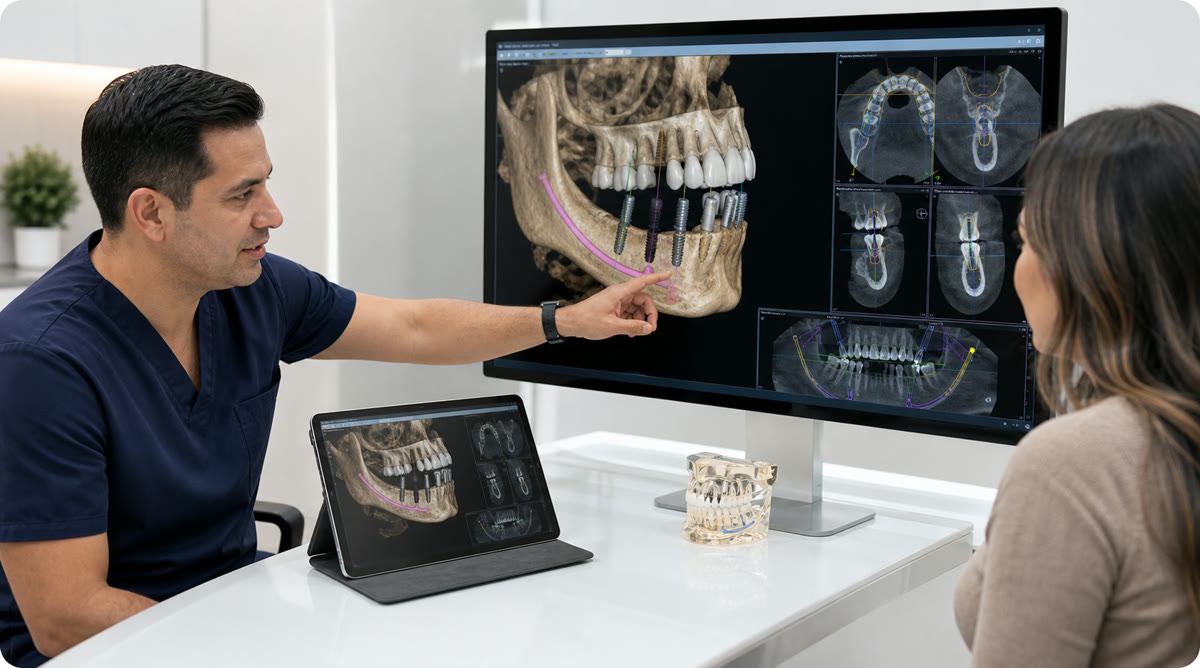
Recovery begins with the plan: surgical scope, provisional teeth, soft diet, healing time, and the final bridge visit.
Soft diet
The temporary bridge should not be treated like final teeth. A soft diet helps protect implants while bone integrates.
Under-bridge hygiene
Water flossers, special brushes, and professional hygiene keep the gum around implants healthier.
Report changes early
Looseness, persistent soreness, odor, swelling, or bite changes should be reported quickly instead of waiting for the next trip.
Recovery questions
Healing should not be rushed by the calendar.
These answers set travel and recovery expectations before the patient books flights or drives south.
How long before I can chew normally?
Chewing is usually limited while the implants integrate. The clinician gives diet instructions based on stability, grafting, provisional design, and healing. Final chewing expectations belong after the definitive bridge.
How long should I stay after surgery?
The safest window depends on surgery scope, swelling, travel distance, and whether the clinician wants an early check. Patients should plan rest time rather than leaving immediately after a major procedure.
What happens between the two trips?
You heal at home, follow diet and hygiene instructions, report any concerns, and return when integration and the restorative plan are ready for the final bridge.
Can recovery change the final bridge timeline?
Yes. Healing, grafting, implant stability, gum response, and bite conditions can change the timing. The final bridge should wait for the biology to be ready.
Plan the trips carefully
Map the treatment around healing.
Send records first so timing, travel, provisional teeth, and final bridge expectations can be discussed before you book.
Send a recent panoramic or CBCT scan if you have one, a few photos, your medical notes, and the one thing that bothers you most. The first answer should be what is realistic, not a deposit request.