All-on-6 vs All-on-4
All-on-6 vs All-on-4 in Mexico
The better treatment is not the one with the larger number. It is the implant plan that your bone, bite, anatomy, bridge design, and maintenance habits can support.
- Question
- Which implant count
- Decision
- CBCT and bite
- Risk
- Forcing the anatomy
- Goal
- Fixed repairable teeth
The actual comparison
More implants can help, until they are forced.
All-on-4, All-on-5, and All-on-6 are not menu items. They are ways to distribute force through the jaw.
Fewer sites, angled support
Can work when the front bone is favorable and the bridge design can control force. It may be the safer answer when posterior bone is limited.
More support points
Can reduce unsupported span and distribute bite force, especially in selected upper-arch cases or heavier bite situations.
Bone and bite
CBCT shows anatomy. The bite shows force. The final bridge design determines what the implants must carry.
All-on-4 may be appropriate when the anatomy supports four stable implants and the bridge can be designed without excessive cantilever or overload. All-on-6 may be appropriate when safe extra sites exist and the case benefits from more distributed support.
The wrong decision is choosing by advertising. Six implants placed in poor bone or at compromised angles are not better than four well-planned implants. Four implants overloaded by a heavy bite or long unsupported span may not be enough. The scan and restorative plan decide.
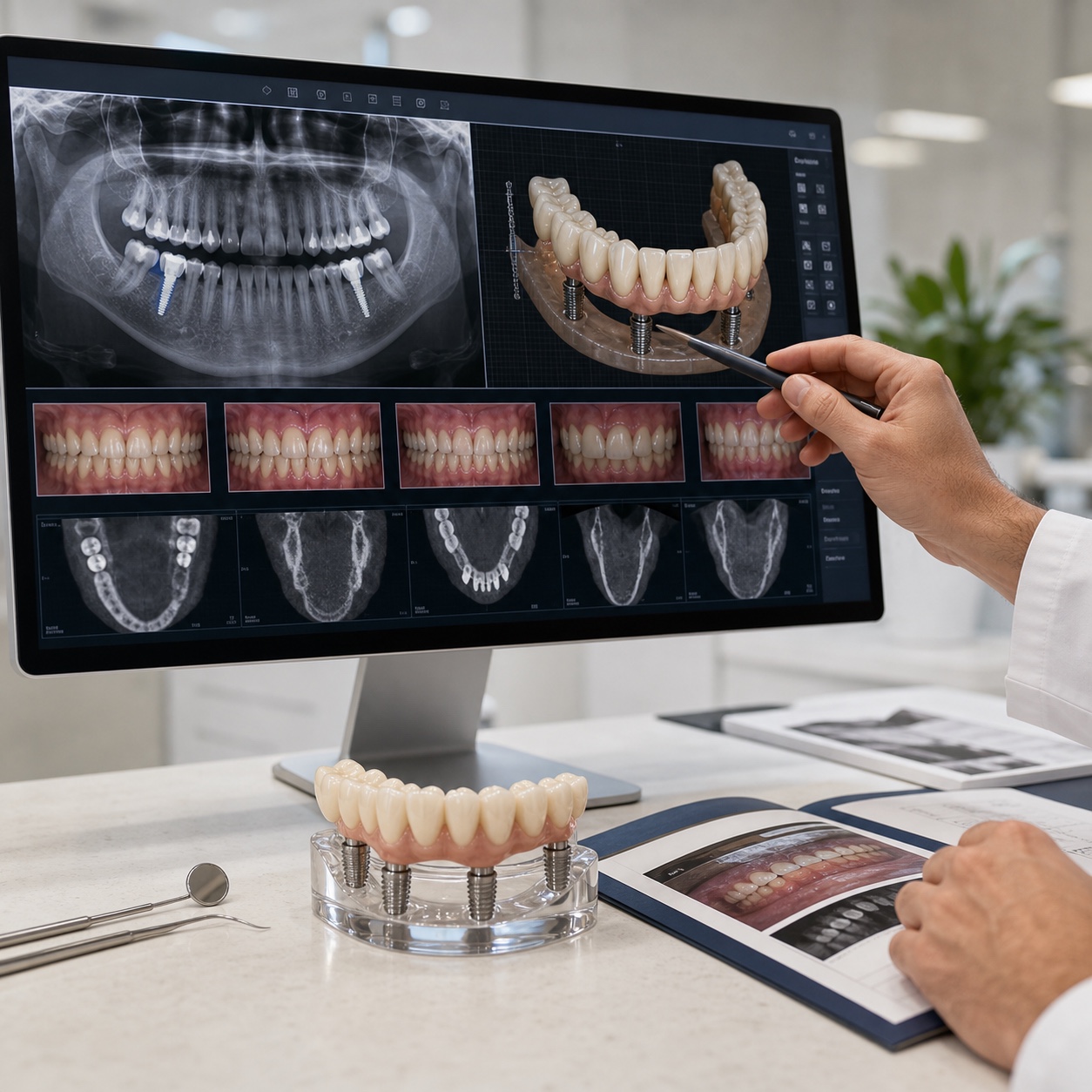
Use CBCT planning visuals to show why implant count is a diagnosis, not a package name.
Comparison questions
The better option is the one the anatomy can support.
These questions keep the comparison from becoming a simple bigger-number argument.
Is All-on-6 always better than All-on-4?
No. All-on-6 can help when extra safe implant sites improve support, but All-on-4 can be the safer plan when posterior bone is limited or the extra implants would be forced into compromised positions.
Does All-on-6 cost more than All-on-4?
Usually it can, because there are more implants, components, surgical planning, and sometimes more lab complexity. The total also depends on grafting, provisional teeth, final bridge material, and warranty terms.
Why is the upper jaw often discussed differently?
The upper jaw can have softer bone and sinus limitations, so the number and position of implants may be different from the lower jaw. CBCT is needed to see whether extra support is actually available.
Can the plan change after I arrive?
Yes. A remote review can guide the conversation, but the final plan is confirmed after clinical exam and CBCT review. If infection, bone loss, or bite issues are different than expected, the plan can change.
Compare with records
Send the scan before choosing a number.
The right implant count can only be discussed after the bone, bite, sinus position, nerve location, and bridge design are reviewed.
Send a recent panoramic or CBCT scan if you have one, a few photos, your medical notes, and the one thing that bothers you most. The first answer should be what is realistic, not a deposit request.