Who qualifies
Who Qualifies for All-on-6 Dental Implants?
All-on-6 candidacy depends on bone volume, bite force, gum health, medical history, restorative space, and whether the patient can maintain a fixed bridge long term.
- Bone
- Enough safe sites
- Health
- Controlled risk factors
- Bite
- Manageable forces
- Care
- Daily maintenance
Candidate signals
The right patient has more than missing teeth.
A fixed full arch has to be surgically possible, restoratively sensible, and maintainable after travel.
Enough bone
Six safe implant positions with adequate width, height, and angulation.
Controlled infection
Active gum disease or dental infection must be treated before implants are asked to heal.
Medical readiness
Diabetes, smoking, medications, and healing risks have to be reviewed honestly.
Maintenance mindset
A fixed bridge needs daily cleaning under the teeth and professional follow-up.
Often promising
Failing teeth or dentures, enough bone on CBCT, controlled gum condition, realistic timeline, and commitment to hygiene.
Needs caution
Heavy smoking, uncontrolled diabetes, untreated periodontal disease, severe grinding, or expectation that implants need no maintenance.
May still work staged
Some patients need extractions, grafting, sinus lift, or infection control before the final All-on-6 plan is safe.
May be declined
If anatomy, health risk, or maintenance risk makes the procedure unsafe or unlikely to be serviceable, the honest answer is no.
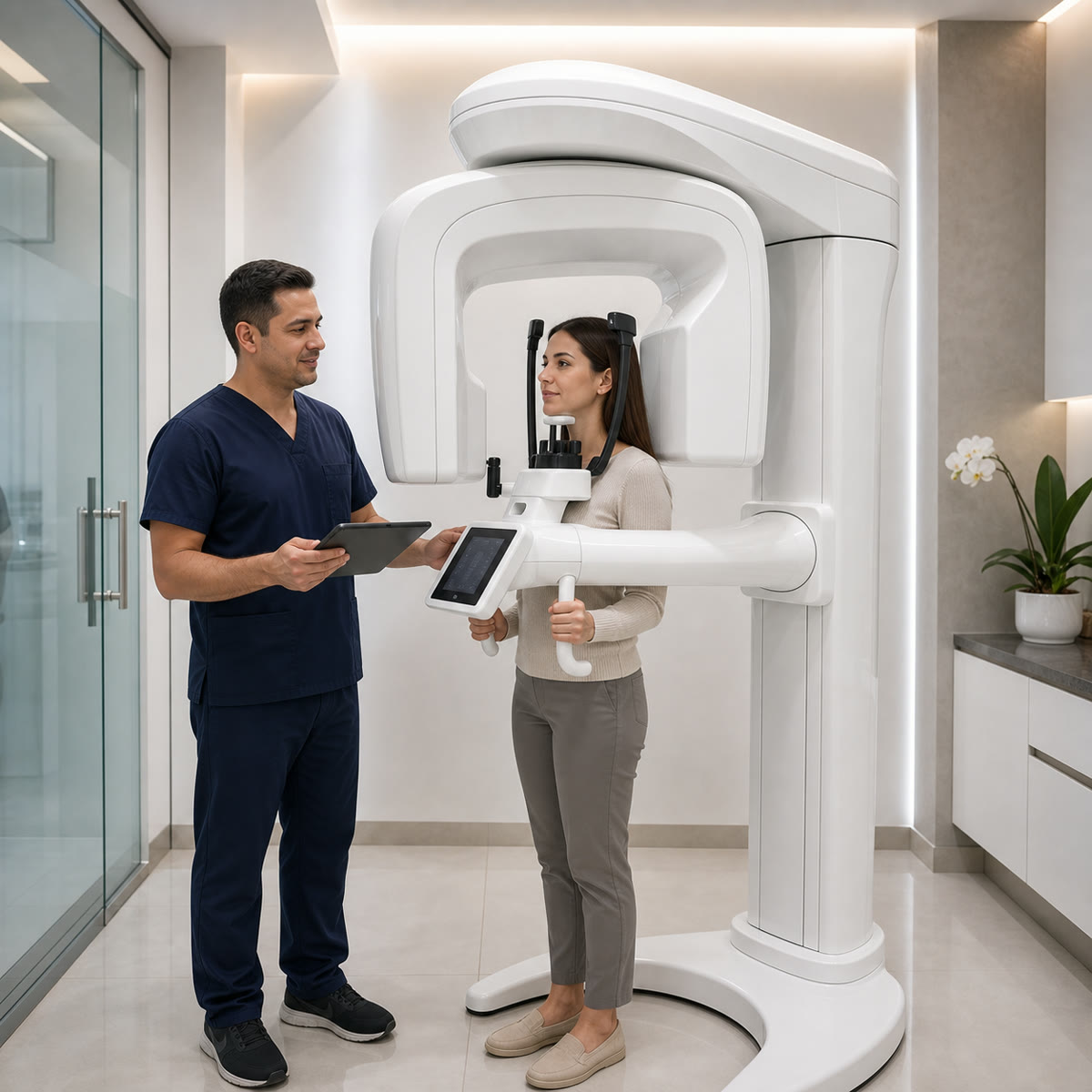
The scan should show whether six implant sites are realistic before the patient travels.
What the scan can change
Candidacy is often decided by what patients cannot see.
From the outside, two patients may look similar: missing teeth, loose dentures, or a failing bridge. On CBCT, they can be completely different. One may have enough bone for six implants and immediate provisional teeth. Another may need sinus lift, bone grafting, infection control, or a staged plan before a fixed bridge is safe.
That is why a page cannot promise candidacy. It can only show the signals that make treatment more or less likely and explain why the final answer belongs to the diagnosis.
Candidacy questions
The yes or no comes from the records.
These answers help patients understand why a scan-first review matters.
Can smokers get All-on-6 dental implants?
Some smokers may still be candidates, but smoking increases healing risk and implant complications. Heavy or uncontrolled smoking can lead to delay, staged care, or a recommendation against treatment.
Can diabetes affect All-on-6 candidacy?
Yes. Controlled diabetes may still allow implant treatment, but uncontrolled blood sugar can affect healing and infection risk. Medical history should be reviewed before travel.
What if I have bone loss?
Bone loss does not automatically rule out treatment, but it can change implant count, angulation, grafting needs, timeline, and cost. CBCT is needed to measure the foundation.
What if I grind my teeth?
Heavy grinding changes the bite design and material conversation. The bridge may need different reinforcement, nightguard planning, or more cautious loading.
Start with candidacy
Send the scan. Learn what is realistic.
A remote review cannot diagnose you, but it can identify whether All-on-6 is worth discussing before you travel.
Send a recent panoramic or CBCT scan if you have one, a few photos, your medical notes, and the one thing that bothers you most. The first answer should be what is realistic, not a deposit request.